


One of the biggest challenges about going gluten free is the breads. And if you love making your own hamburgers, finding a good gluten free bun to go with can be next to impossible at times, but not today.
This recipe will give you one moist, puffy, spongy, flavorful bun that will hold together and won’t taste like you just bit into crumbling cardboard. But the best part? It only takes a few minutes to make.
This one’s a winner.
Enjoy!
Sarah
Single Gluten Free Burger Bun
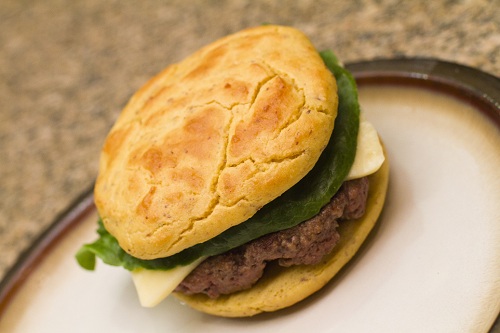 |
| Single Gluten Free Burger Bun |
| photo by Jeremiah Shilhavy |
Servings: 1
Preparation Time: 10 minutes
Ingredients for one single bun:
- 1 egg
- 1 tablespoon coconut flour
- 1 tablespoon blanched almond flour
- 1 tablespoon coconut oil (olive oil or melted butter)
- Pinch salt
- 1/4 teaspoon baking powder
Optional:
- 1 teaspoon nutritional yeast
- 1/4 teaspoon poppy seeds, chia seeds, sesame seeds
Preheat oven to 350 degrees F.
Add all ingredients and blend together using a hand blender or small food processor. Let the batter settle for a few minutes to thicken.
Split the mixture into two and spoon onto oiled parchment paper to make two 3-inch diameter pools of batter. Top with additional seeds if desired.
Bake in preheated oven for 10 minutes.
Use each piece as top and bottom of a burger bun.
While it is baking you can throw your burger on the grill. If you’re lucky the burger will be done by the time the bun is cooked!
Recipe submitted by Mandy, Denver, CO


 (12 votes, average: 3.92 out of 5)





82 Comments